Credit: Wirestock/Unsplash

California conservation efforts boost Lake Mead water levels

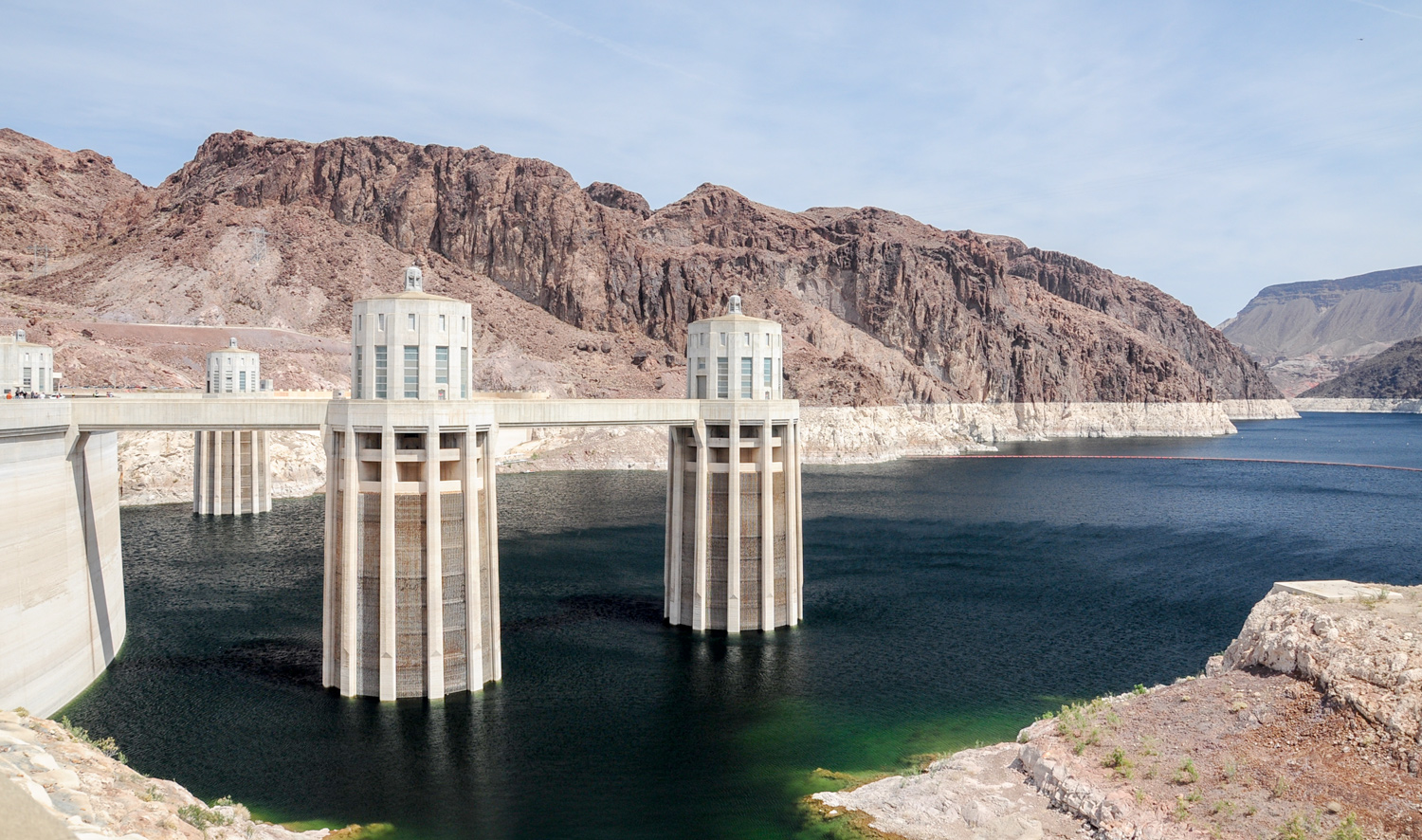
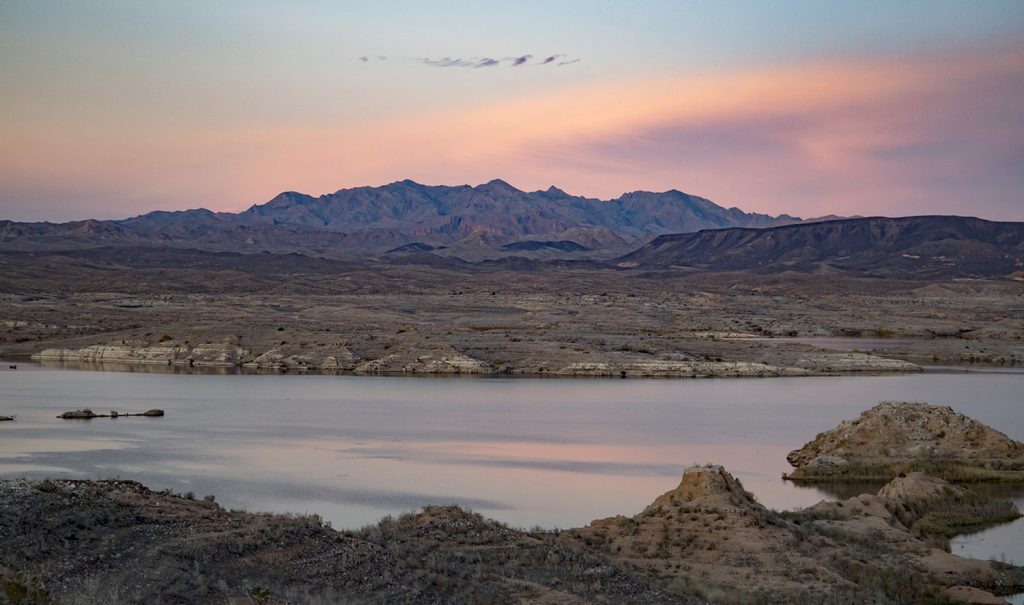
Lake Mead is the biggest water store on the Colorado River but by 2022 its levels were at record lows. In the past two years, California has led the way in efforts that have led the way in leaving more water in the lake.

The critically important Lake Mead has seen its water level rise by more than 16 feet in just two years, thanks in large part to the conservation efforts of Californian water users.

Talking at the 2024 Colorado River Water Users Association’s conference in Las Vegas, JB Hamby, chairman of the Colorado River Board of California and Colorado River Commissioner for California, highlighted the progress made by the state since 2022.

The rise in water levels, Hamby said, was the equivalent of adding more than 391 billion gallons (the equivalent of 1.2 million acre-feet) of water.

The importance of Lake Mead to the Colorado River Basin

Lake Mead was created in 1935 when the Bureau of Reclamation decided to dam the narrow Black Canyon section of the Colorado River. This led to the creation of the Hoover Dam, the resulting lake, as the largest manmade reservoir in the US. It spans more than 110 miles, has a maximum depth of 532 feet and at its fullest can hold approximately 9.3 trillion gallons of water.

The lake is an important water store for lower basin states and together with Lake Powell, which sits further along the river’s course, accounts for 90% of the total storage in the Colorado River Basin.
It was the historic low levels in Lake Mead and Lake Powell observed in 2021 and 2022 following two-decades of drought that led to the federal government to issue western states with the ultimatum: ‘voluntary cut your water use, or we will force you to’.

In praise of conservation
Credit: Ann Boulias/Pixabay

Credit: Ann Boulias/Pixabay

Three states – Nevada, Arizona, and California – committed to collectively reduce water use by at least 977 billion by the end of 2026, when the current water management rules expire. All seven Colorado River Basin states, along with Tribal Nations and the federal government, are now locked in stalemate trying to agree on what happens post-2026.

Hamby told the conference: “Actions speak louder than words, and we [California] are proud to lead by example on the river.”

It is an example of what needs to happen in the river. It’s all of us together.

Historically, California has rights to the largest share of Colorado River water, with an allocation of 1.4 trillion gallons per year. As such, California water agencies took the largest water cuts, committing to conserve 521 billion of water in Lake Mead by 2026.

U.S. Bureau of Reclamation commissioner Camille Calimlim Touton told the conference: “California has been an incredible partner. The conservation that California is contributing to the river is unprecedented. It is an example of what needs to happen in the river. It’s all of us together. It’s agriculture, it is the tribal nations, it’s municipalities.”

According to the Colorado River Water Users Association’s annual report, by the end of 2024, the state had reached almost three quarters of its water saving commitments ahead of the 2026 deadline – with 162 billion gallons conserved in 2024 and 228 billion gallons saved in 2023.

Mother Nature’s helping hand

California produced its impressive water savings through on-farm conservation programs, temporary and seasonal land-fallowing programs, curtailment of replenishment water for groundwater basins, turf replacement programs, and urban water efficiency efforts.

Additionally, the conservation effort was helped by a series of storms in 2022 and 2023 which brought snow and rain. According to USGS records, 2023 was wet year with above-average precipitation at many locations, and the Rocky Mountain snowpack growing to near-record levels in places, however, it was not uniformly good or record-setting.

Jim Madaffar, the vice chair of the Colorado River Board of California, told the conference: “Mother Nature provided us a helping hand over the last couple of years.”

A wet 2023 has offered a buffer that has allowed stakeholders in the basin to establish the collaborations and partnerships needed to conserve water for Lake Mead.

Madaffar added: “We know we still face challenges on the river due to drought in our changing climate, but the collaborations really provide a benchmark for how we’re moving forward to ensure that the river continues to serve all users.”

Still a long way to go to ensure water security

In 2023, California, together with Nevada and Arizona conserved more water than during any previous year since 1984. However, there is still a long way to go before full recovery, with water levels at the end of 2024 reaching 33% of full capacity.

Regulators in California have argued that their efforts to improve Lake Mead’s levels have resulted in downstream benefits, reducing the need for water releases from Lake Powell, which serves four states – Colorado, New Mexico, Utah, and Wyoming.

We know we still face challenges on the river due to drought.

This demographic split between the lower and upper states has led to separate post-2026 water management proposals and resulted in talks grinding to a halt.

Hamby feels that other states should follow California’s lead: “Every user, sector, state, and basin must do their part to protect this river. No one has shown that more than California’s cities, farms, and tribes.”

Arizona and the Fort Yuma Quechan Indian Tribe

California, of course, is not alone in its conservation efforts. Arizona is committed to conserving an additional 977 billion gallons in the system by the end of 2026, representing a substantial commitment to the stability of the river system.

To date, since 2022, Arizona has executed conservation agreements totalling 319 billion gallons, not including mandatory reductions in use, which equated to 166 billion gallons in 2024.

In 2024, the Fort Yuma Quechan Indian Tribe planned and implemented water conservation initiatives, infrastructure improvements and ecosystem restoration projects on the Fort Yuma Indian Reservation.

These included the third year of its seasonal fallowing program in partnership with the Metropolitan Water District (MWD), the second year of its own seasonal fallowing program, as well as the second year of its System Conservation Implementation Agreement with MWD and the Bureau of Reclamation to conserve 4.2 billion gallons of water in Lake Mead.