

Is groundwater recovery in Arizona sustainable?
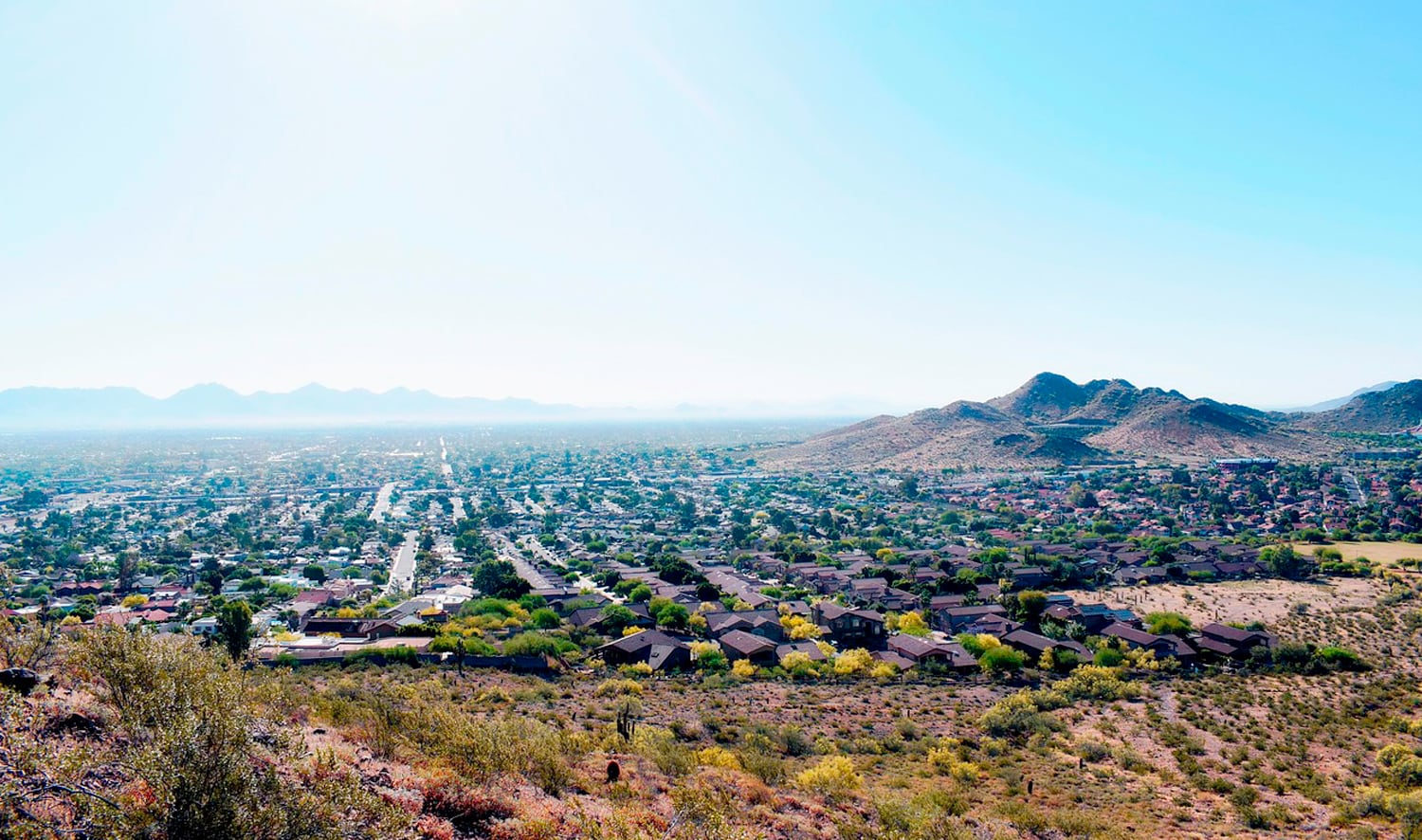
First the good news: groundwater levels in central Arizona have begun to recover after decades of water stress and drought. According to researchers at the University of Texas, and collaborators from both Arizona and Colorado, a combination of intentional water management practices and unintentional secondary benefits from agriculture have seen levels stabilise across three active management areas.
And the bad news: much of this recovery is based on water being steered from the Colorado River, which itself is under stress, and subject to over extraction. The danger is that state allocations of water from the Colorado River could be reduced to such a level that any shortfall will need to be supplied by those same aquifers that have started to stabilise.
Arizona and the Colorado River
The state of Arizona sources 36% of its annual water supply from the Colorado River. Under the current agreement between the seven river basin states, the state can extract 912 billion gallons of water every year from the Colorado River. The state’s other major sources of water are from groundwater (41%), in-state rivers (18%), and reclaimed water (5%).
In keeping with other states, the majority of this water is used for agriculture (72%), followed by municipal use (22%), and industrial use (6%). The largest overall consumer of water in Arizona (2000-2019) was irrigation for cattle feed crops, which accounted for 46% of all water used.
Water from the Colorado River is brought to the state via the Central Arizona Project, a network of aqueducts and canals that run for more than 300 miles.
Groundwater recovery in central Arizona
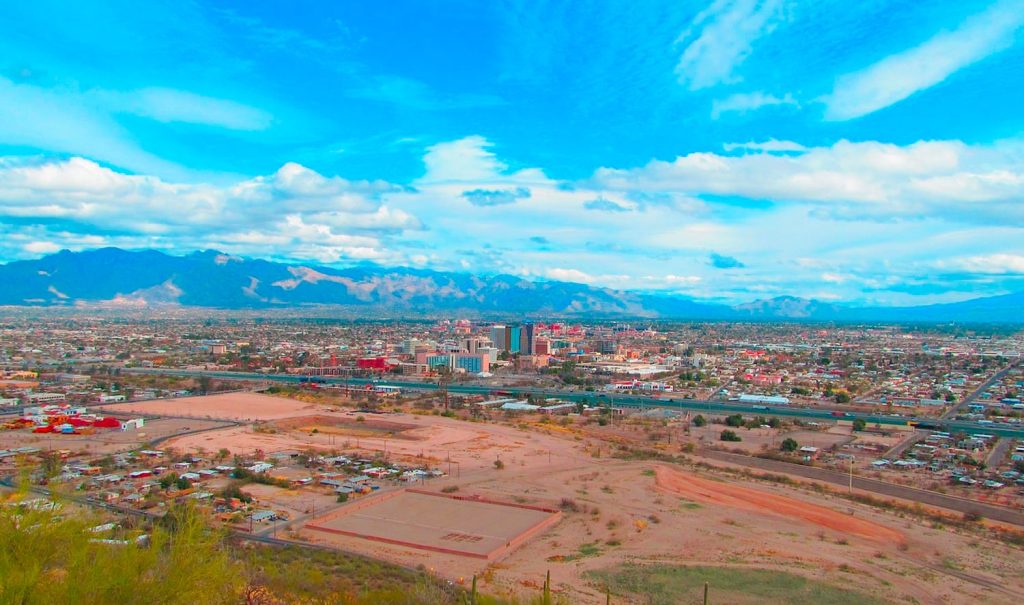
The researchers noted that some of the policies adopted by Arizona incentivized farmers to use surface water sources rather than tap into groundwater reserves, while other policies help to channel the river water directly into aquifer recharge zones, where it can then find it way down into groundwater.
Water use and supply sources are monitored closely, partly because of the allocated extraction limits set by the 1922 river compact; with future allocations currently being negotiated for approval by congress.
Drought conditions have been prevalent in the Colorado River Basin for decades. The two largest reservoirs on the river – Lake Mead and Lake Powell – experienced alarming falls in water levels from 90% in 2000 to around 25% by early 2023 as a result of climate change, declining river flows and over-extraction. Since then, levels have recovered slightly, although nowhere near their 2000 capacity. These levels affect how much water is available for users in each of the seven basin states, including Arizona.
The latest research, which studied data from 1989-2019, suggests Arizona’s policies banked a total of 10.5 cubic kilometres (km3) of groundwater water over the course of that period in the Phoenix, Tucson and Pinal active management areas. The three regions feature agricultural land larger than some states.
Beyond the active management program, the researchers found that 14.2 km3 found in the aquifers within those regions could be attributed to water seeping in from surface-water irrigation, an unexpected bonus.
Together, the boost to groundwater totalled five times the annual demand for water in the three regions.
“The research shows the value of conjunctive management of surface and groundwater,” lead author Bridget Scanlon, a research professor at the UT Jackson School of Geosciences Bureau of Economic Geology told media.
An uncertain future
As welcome as the recovery has been, there is still cause for concern. Much of the groundwater recovery has come from water from the Colorado River, and that could present a problem.
“Shortage on the Colorado River means we’ll have less water to boost our aquifers, and more pressure to pull groundwater out as a replacement supply,” Kathryn Sorensen, the director of research at Arizona State University’s Kyl Center for Water Policy and the former director of Phoenix Water Services, told media.
It is also unclear how the Colorado River water will be allocated on a state-by-state basis. At the time of writing there has still been no agreement between states, especially between the upper and lower basin states, for allocations once the current agreement runs out in 2026. The agreement will also need to account for Tribal allocations and also the requirements of Mexico into which the Colorado River runs.
Although not named as one of the USA’s top 10 endangered rivers, the Colorado River is facing water stress that is affecting millions of people’ lives and businesses. The levels of stress faced by the Colorado River will put Arizona under pressure to, once again, draw more heavily on its groundwater, meaning any recovery could well be short-lived.
Although Scanlon believes the current study can help when it comes to planning for sustainable river use in the future the research concludes on a cautious note. Future extraction of groundwater, projected reductions in Colorado River deliveries and resulting aquifer recharge reduction would lead to both increased storage losses and also subsidence. Should irrigation demand continue at current levels, the resultant storage loss could see groundwater levels decline by as much as 300 metres, which would greatly increase the cost and effort of pumping water from the ground.
The study
The study differed from previous studies by assessing a wide variety of sources. These included data on terrestrial total water storage (TWS) anomalies (TWSAs) from GRACE (Gravity Recovery and Climate Experiment) satellites, monitored reservoir storage, modelled soil moisture storage, groundwater level monitoring, regional groundwater modelling, subsidence data from InSAR satellites, and water budget accounting from state agencies.
The overall objective of the research was to conduct a comprehensive assessment of past and current water resources accounting, linking climate, surface water, and groundwater to help guide future management strategies in light of likely future shortages on the Colorado River. The analysis focused on the lower Colorado River Basin.
Read the full research paper, here:
Multidecadal drought impacts on the Lower Colorado Basin with implications for future management by Bridget R. Scanlon, Donald R. Pool, Ashraf Rateb, Brian Conway, Kathryn Sorensen, Bradley Udall & Robert C. Reedy; in Communications Earth & Environment volume 6, Article number: 214 (2025)
##
External link
https://mostendangeredrivers.org/
Internal links
https://water-united.com/what-is-the-1922-colorado-river-compact/
https://water-united.com/five-management-options-proposed-for-the-colorado-river/
https://water-united.com/arizonas-tribal-nations-left-without-water-rights/