

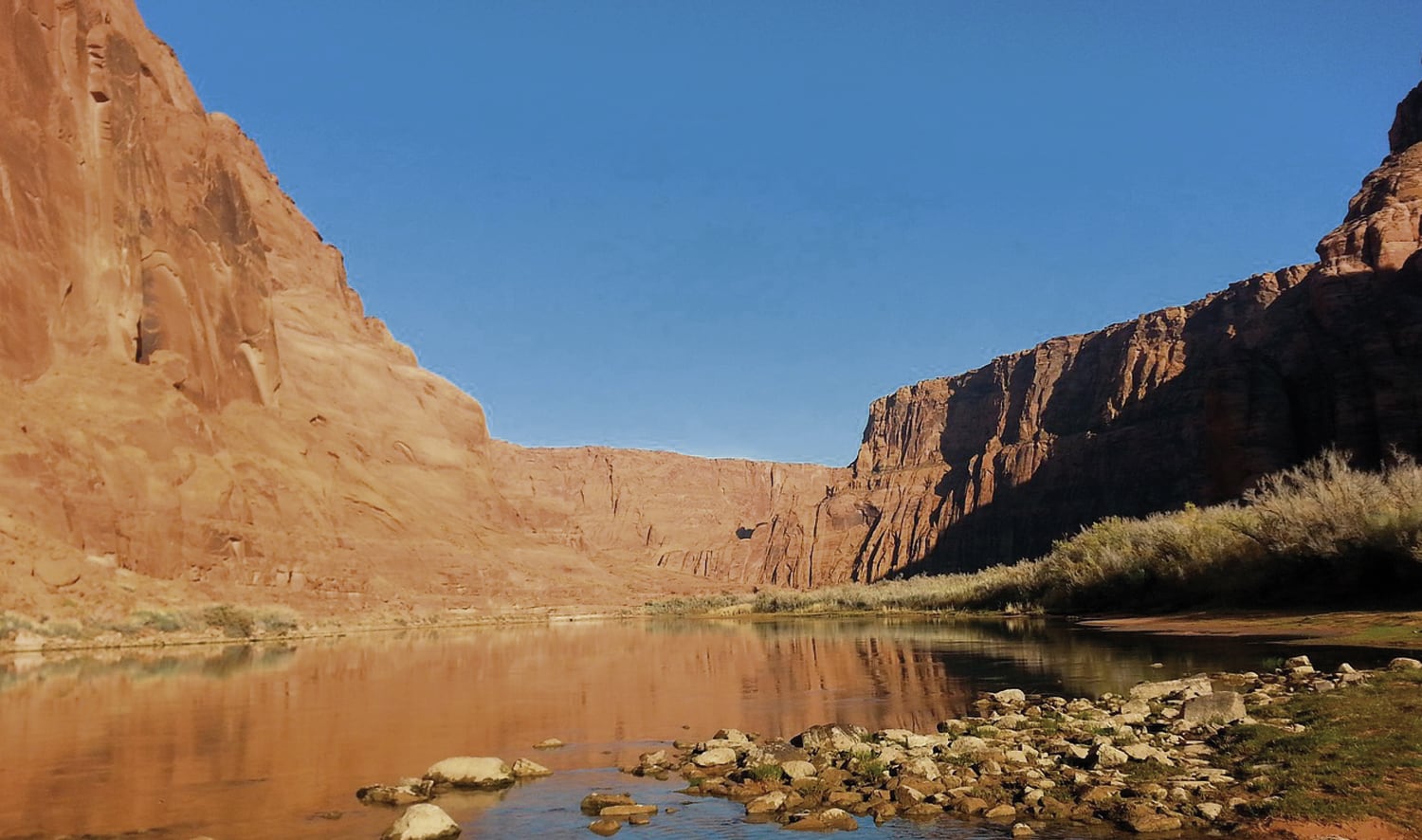
Do we need a new approach to Colorado River water allocation?
The Compact of 1922, and later compacts, notably in 1948 and 1962, set out the legal claims for each state’s use of Colorado river water. These compacts were based on a number of factors that, to an outsider, could seem unfit for the modern world. For example, the major claim to water usage comes from California under the first rights principle. This means that because the state was the first to make a claim to the water running through the Colorado River it had the right to more of it than those who claims followed.
However, each compact and each subsequent agreement has led to periods of division and disagreement. As the states remain locked in stalemate regarding water allocation post-2026 when the current agreement runs out, it is worth noting that most of the official agreements over water allocation have been made for the states, rather than by them, and that this might point the way to a new approach to deciding the future of the Colorado River.
Problems with the 1922 Compact
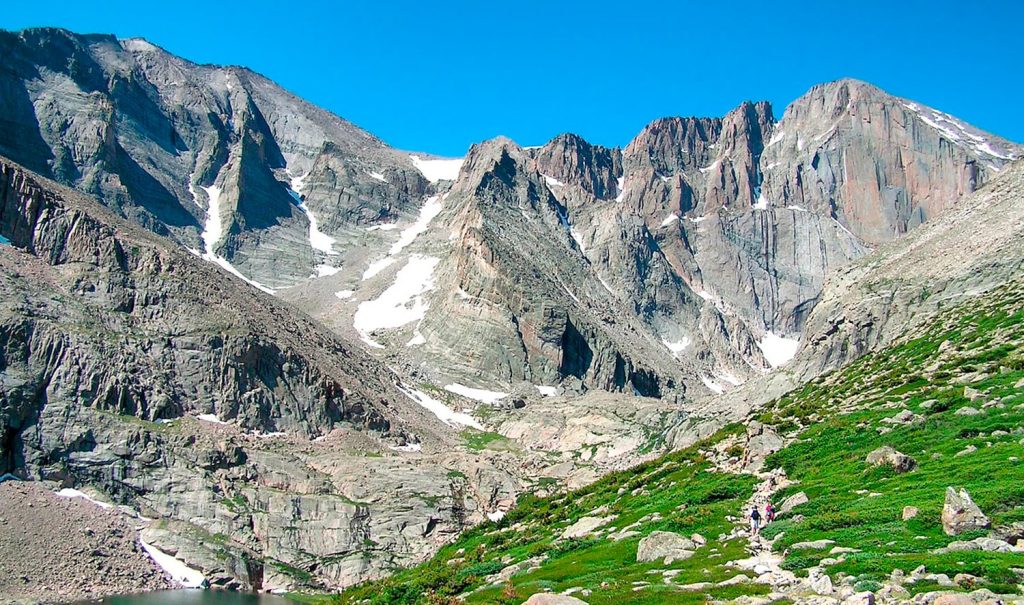
The original compact divided the seven states that rely on the river into upper (Colorado, New Mexico, Utah, Wyoming) and lower basin states (California, Arizona, Nevada), with each group of states allotted 2.4 trillion gallons (7.5 million acre-feet). This figure was based on collections of total river flow through a single point in the river – Lees Ferry. This is where the original assumed flow of the river was measured.
The problem was that the science was far from exact and that there a number of competing estimates ranging from higher to lower volumes of water (see below). The final allocation was a compromise decided by then secretary of commerce Herbert Hoover (later president of the USA) who led the negotiations.
The 1922 Compact also stated that: “The States of the Upper Division will not cause the flow of the river at Lee Ferry to be depleted below an aggregate of 75,000,000 acre-feet for any period of ten consecutive years…”
Over the years this statement has led to disagreement between upper and lower states. The upper basin states believe it to mean that they should not do anything to prevent that amount of water to reach the lower basin, which means they are not seen as ‘delivering’ the water. However, upper basin states believe they are ‘owed’ the water (as well as half of the water allocated under a later agreement to Mexico). Failure to ‘provide’ this water would lead to an inquiry.
Another major problem involved who was not present at the negotiations. Although 29 Tribes have used the Colorado River water for thousands of years, they were excluded, as were their claims, as was Mexico.
Problems arising from later compacts
The 1948 Compact led to the division of water within each state of the upper basins. However, the lower states were not able to agree and it was not until a 1962 United States Supreme Court ruling that the California, Nevada and Arizona allocations were decided. As mentioned above, this utilised the ‘first rights’ principle, which meant California was allocated more of a share of the 2.4 trillion gallons (7.5 million acre-feet) than the other two lower basin states.
Of course, one of the major problems with the first right principle is that the water being claimed by California arises over a thousand miles away in the Rocky Mountains in Colorado, which has a lesser claim to the water. If you are in California, this seems fair enough, however, if you are in Colorado, or one of the other Upper basin states, or even one of the lower basin states through which the river passes before reaching California, it can seem a little unfair.
It has also led to upper basin officials claiming that having ‘first rights’ means that in times of shortage, the more junior rights holders should forego some of their usage to ensure the senior rights holders have access to all of their allocated water.
In some ways, the upper basin states have more access to water as it flows from the river’s source, but the lower basin states have the bigger cities and consumers, and also more political influence.
Suffering from original estimates
The Colorado River is under stress from climate change, both evaporation and a reduced snowpack. Many of the original flow calculations didn’t account for these measures. Brad Udall, a senior water and climate research scientist at the Colorado Water Institute at Colorado State University, told Smithsonian magazine that the original measurements were made during an unusually wet period when few stream gauges were present to measure flow and with very little historical data to compare.
In fact, a more accurate representation of the river was available at the time of the 1922 negotiations. Hydrologist Eugene Clyde La Rue spent 10 years working surveying dam sites and river discharge measurements for the US Geological Survey. His calculations for flow at Lee Ferry were 10 per cent lower than the one decided upon by Hoover. He also argued that a longer-term view of the river’s flow should be used to decide how water could be used. Hoover was aware of La Rue’s data, but chose not to use it.
It is likely, therefore, that the original estimates that established the allocations for each basin state was wrong, and that even during a significantly wet period, there was never as much available water to use as the 1922 Compact suggested.
If you add in the decades of drought-like conditions the states have faced, the ever-growing need for water from agriculture, the need for water to be stored in reservoirs for hydro-power operations and population growth that has far exceeded original estimates, then you can see why there is a growing problem.
Using data from 1915, Hoover had predicted the basin’s population would quadruple to around 1.6 million, whereas today the river serves 40 million people, as well as industry, tourism and agriculture. This means the states are using more now than the original compact predicted. In fact, Udall states, in terms of the 1922 Compact’s total seven-state allowance of 4.89 trillion gallons a year (15 million acre-feet), the river’s flow since 2000 has average to around 3.91 trillion gallons (12 million acre-feet). In simple terms, the river is not supplying the water allocated in the 1922 Compact.
The stalemate continues
Over the years, revisions to the agreements have taken place and been adjusted according to the estimates, needs and politics of the day. In every state, water reuse and conservation measures have been put in place to try and limit the amount of water taken from the river. Generally, it is estimated that the upper basin states are using less water than they are allocated, while the lower basin states are using their full allocation.
The current agreement was put in place by the Bureau of Reclamation, but is due to run out in 2026. Negotiations are ongoing to try to reach an agreement between upper and lower basin states and between the states themselves, including agreements with the Tribes and Mexico. In early 2025, the Federal Government proposed five options for reaching an agreement,
In a statement prepared for local media at the time of the proposals being launched, US Senator John Hickenlooper, a Colorado Democrat, said: “These proposed alternatives underscore how serious a situation we’re facing on the Colorado River. The only path forward is a collaborative, seven-state plan to solve the Colorado River crisis without taking this to court. Otherwise, we’ll watch the river run dry while we sue each other.”
Is there another way to solve the problem?
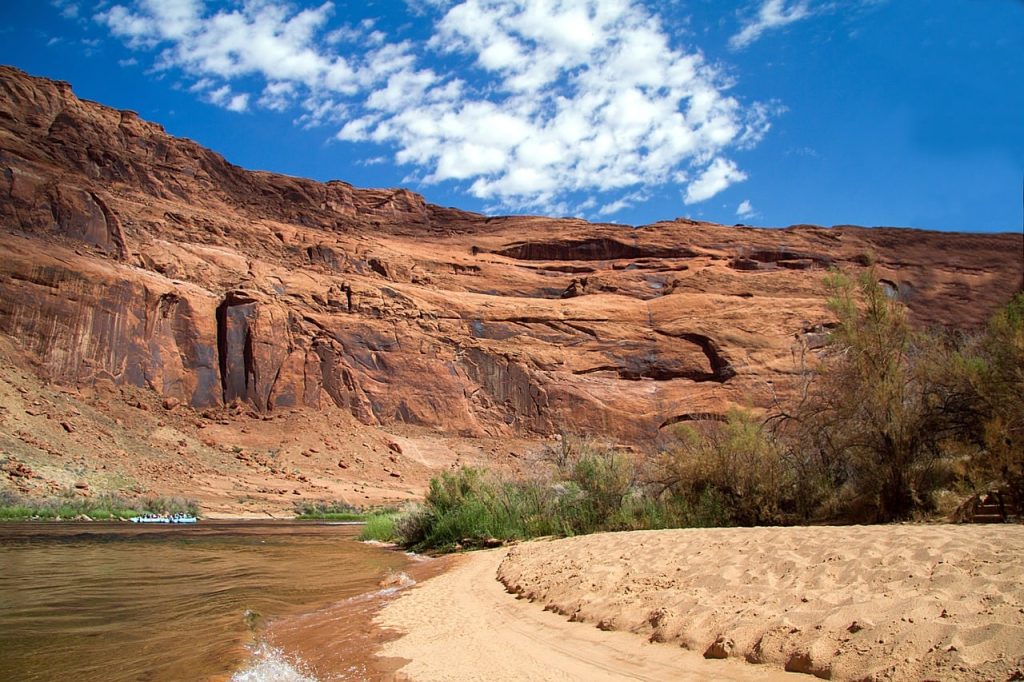
Generally, there is agreement that something needs to be done to ensure fair usage for the states and the Tribes, as well as Mexico, which also depends on the Colorado River. However, within that agreement, each stakeholder has their own needs and requirements. Finding a way to resolve these, at times, conflicting issues, within the broader scope of the Compact, as seen above, is proving to be a sticking point again and again.
One instant solution is to have the Bureau of Reclamation take control. It has happened before under the first administration of President Trump and also under President Biden. And the bureau has threatened to do so again.
This option has backing from Felica Marcus. “This is exactly what they need to do,” Marcus, general manager of the Public Works Department for the City of Los Angeles, told Will Sarni, a founding member of Water United on The Stream podcast.
Marcus has experience of dealing with complicated water access and distribution issues and told Sarni, and co-host Tom Freyberg, that she had seen a pattern developing in negotiations among the river basin states.
There's a point at which people are staking their ground because they don't want to be taken advantage of
“I think it’s all about people,” she began. “I’ve observed the same thing: first, it seemed like there were angry words and rhetoric where people staked out their positions. Then everyone seemed to get along and now they seem balkanized again but in different ways.”
The uncertainty surrounding river levels, allocations, first-rights principles, and so on, has led people to fight their own corners. “There’s a point at which people are staking their ground because they don’t want to be taken advantage of,” she stated. “You’ll have the lower basin saying, ‘Hey, we’ve got law of the river on our side and if we litigate, we win’, then you’ve got the upper basin saying, ‘Hey, wait a minute. You guys made a terrible deal a 100 years ago that assumed there’d be more water than there is. And the way it’s set up is wrong’. Then you have the Tribes saying, ‘Hey, wait a minute. You all develop based on our water.” And so, give us our shot at it’. Things are more complicated.”
With such entrenched views, all ultimately based on the 1922 Compact, perhaps it is time for some radical thinking?
Sarni during the same podcast conversation said: “My personal view is that they need to redo the law of the river. I mean, the whole thing was wrong when they set it up over 100 years ago and it’s time for a reboot.”
How do you reboot a 100-year-old agreement?
For Marcus, it’s starts with talking to people individually. She cited the Bay Delta Accord as a prime example of what can be achieved to address water allocation issues when there are often entrenched and conflicting demands.
The 1994 Bay-Delta Accord was signed by to help California urban water suppliers to plan future water supplies at a time when the water available has been reduced. The accord also led to a new paradigm in dealing with water and environmental issues that called for negotiation and accommodation rather than confrontation and conflict.
“You have to spend a lot of time one-on-one with people. One of the reasons the Bay-Delta Accord happened was because we [Marcus and EPA staff] interviewed all of the water agencies and asked, ‘What do you need?’ So, we put together a deal that gave them what they needed, not just what they were asking for. And that was fair,” she said.
She added: “You can’t expect them just lock them in a room, them to come out of it. You have to both help them figure out what it ought to be one-on-one behind the scenes. Unless you really understand their politics, you can’t help them construct a way out of this war of the worlds.”
We put together a deal that gave them what they needed, not just what they were asking for
And the Bay-Delta Accord could shine a light on the way forward. Rather than re-negotiate within the limiting binds of the 1922 Compact, outdated as its predictions and assumptions were, it is time to completely rethink the Colorado River allocations based on need and take the decisions away from the states.
“Any water official, whether an agency or a state official, cannot be seen to be giving their water away. They can’t be too nice,” explains Marcus. “And so, someone else has to figure out what the deal is that they can live with and survive politically, and then you take the heat. Politically, people need something to hide behind because they can’t look like they’re giving their water away.”
It seems likely that the Bureau of Reclamations will make the final decision on the post-2026 landscape, so perhaps the time has come for bold, even radical thinking. Rather than tinker within the confines of the Compacts of 1922, 1948 and 1962, and given current snowpack, climate change, population growth and river level predictions and measurements, and given the progress each state is making towards water conservation and reuse, perhaps now is the right time to completely rethink everything associated with the Colorado River and water allocations.
##
Five management options proposed for the Colorado River
//